Define the packaging project before shortlisting producers
The most useful comparison starts with the same written brief sent to each candidate. Specify what the bottle will contain, its intended market, nominal fill volume, first-order quantity and expected repeat demand. Distinguish the quantity needed for launch from a forecast that has not yet been committed.
Capacity alone is not a complete specification. State whether the requested volume is the intended fill or brimful capacity, and identify any limits on height, diameter, weight or label area. Explain how the bottle will be filled, closed, packed and transported. A bottle that meets the visual brief may still need changes to work with the filling line or chosen stopper.
Separate essential requirements from preferences. For example, a required closure interface is a functional constraint; a preferred shoulder shape may be negotiable. If you do not yet have a technical drawing, provide a clearly identified reference and ask the supplier to record assumptions rather than treating an image as a finished specification.
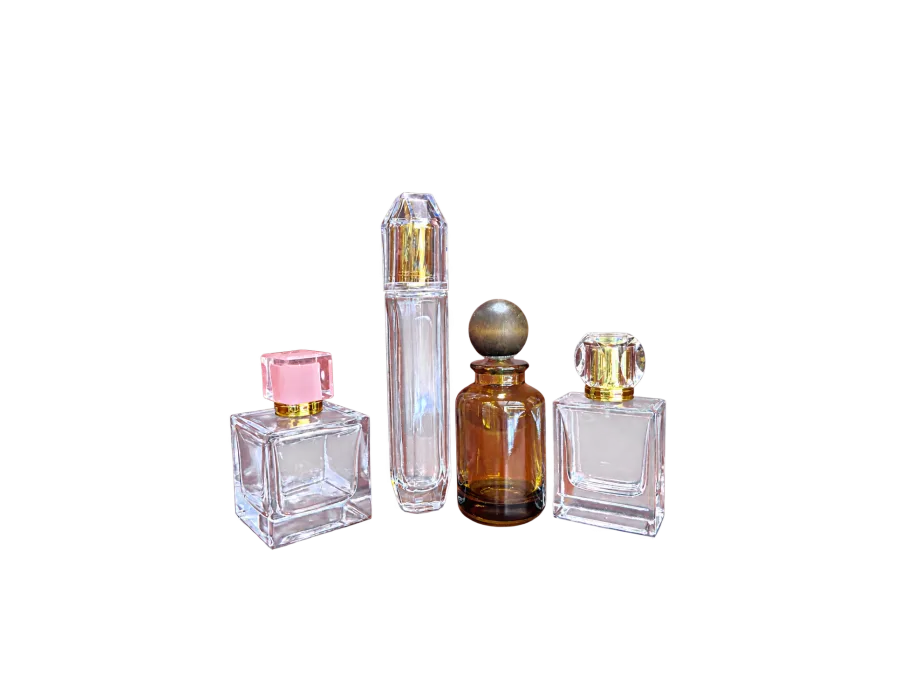
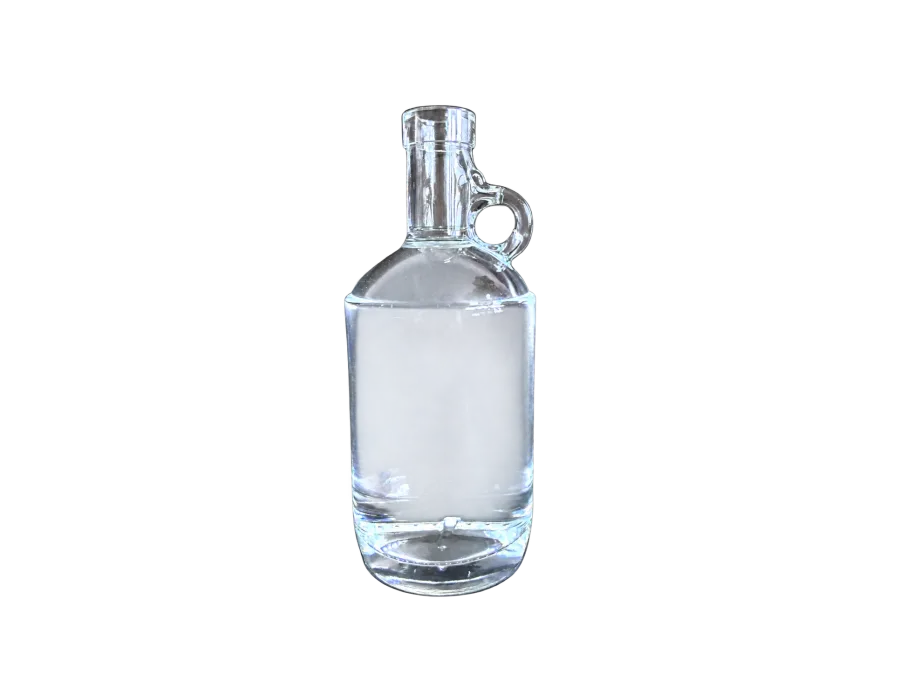
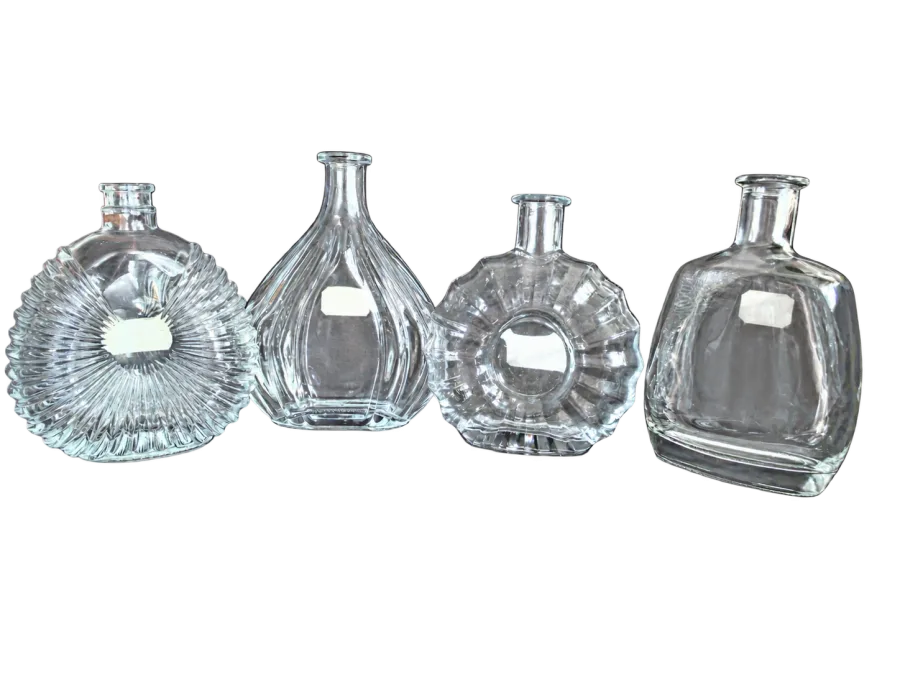
For spirits projects, Ruisheng Glass manufactures bottles for vodka, whisky, brandy, rum, tequila and gin. Glass Whiskey Bottles and Glass Vodka Bottles provide relevant starting points for those applications. A perfume project belongs with Glass Perfume bottles and needs its own compatibility review; suitability for spirits does not establish suitability for fragrance.
Establish who makes the bottle and who carries responsibility
A manufacturer operates the production process; a trader or distributor sources bottles from other businesses. Either arrangement can be useful, but the commercial label does not settle who controls tooling, approves changes, releases batches or resolves a defect claim. Ask each candidate to explain its actual role for your selected bottle.
When evaluating glass packaging suppliers, identify the contracting company, production site and any separate decoration or closure suppliers. A glass bottle factory may make the container while another business supplies its stopper or applies a coating. Establish who coordinates those interfaces and who is accountable if the assembled package does not meet the agreed specification.
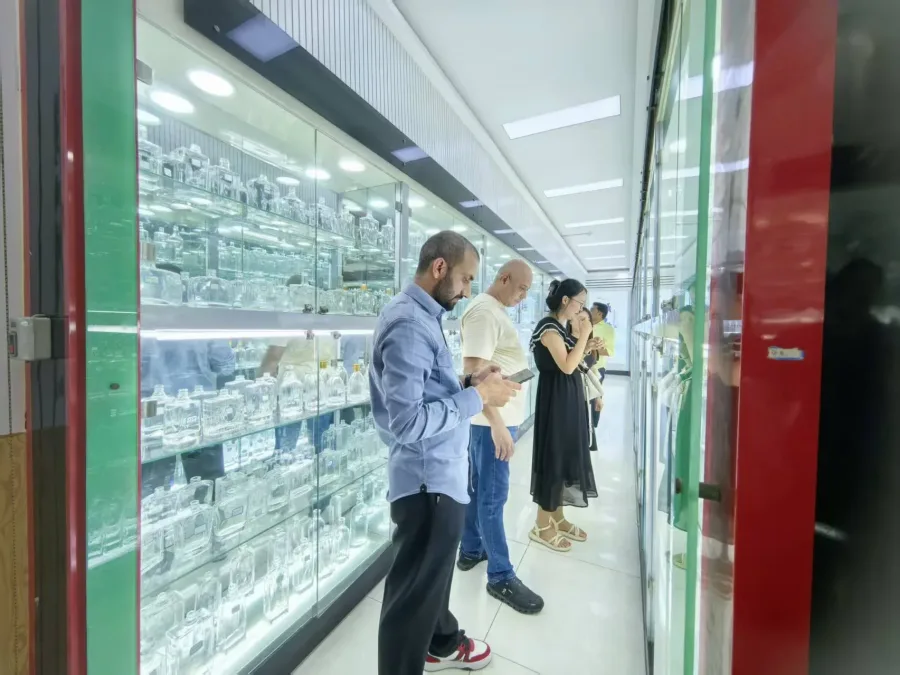
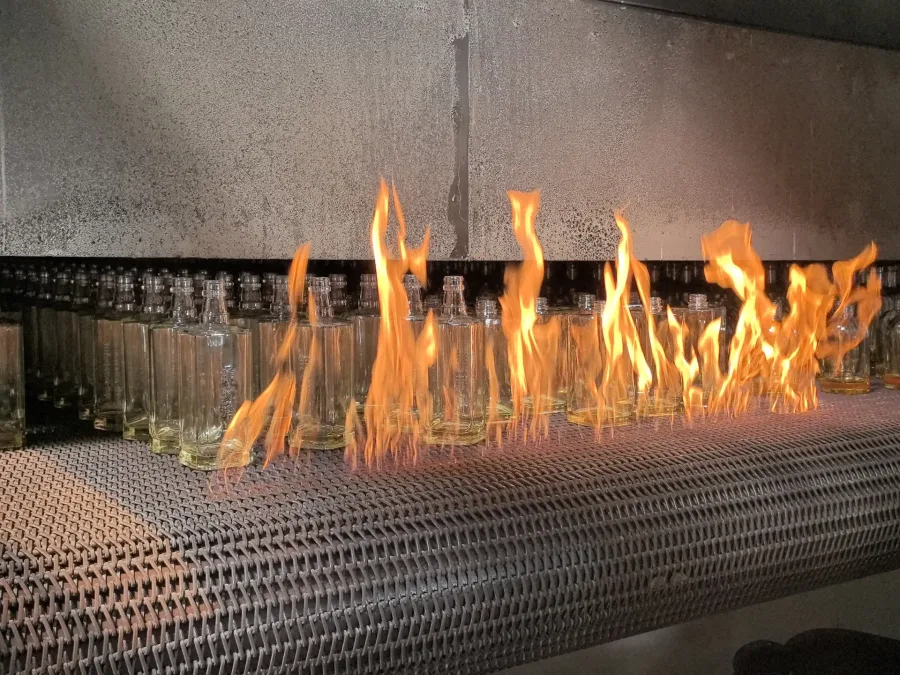
Ruisheng’s catalogue reports five furnaces, 80 production lines and output of up to one million glass bottles per day. These are company-wide catalogue claims, not capacity reserved for a particular model or order. The excerpt has no publication date or independent verification, so buyers should request current substantiation rather than use the figures as a delivery commitment.
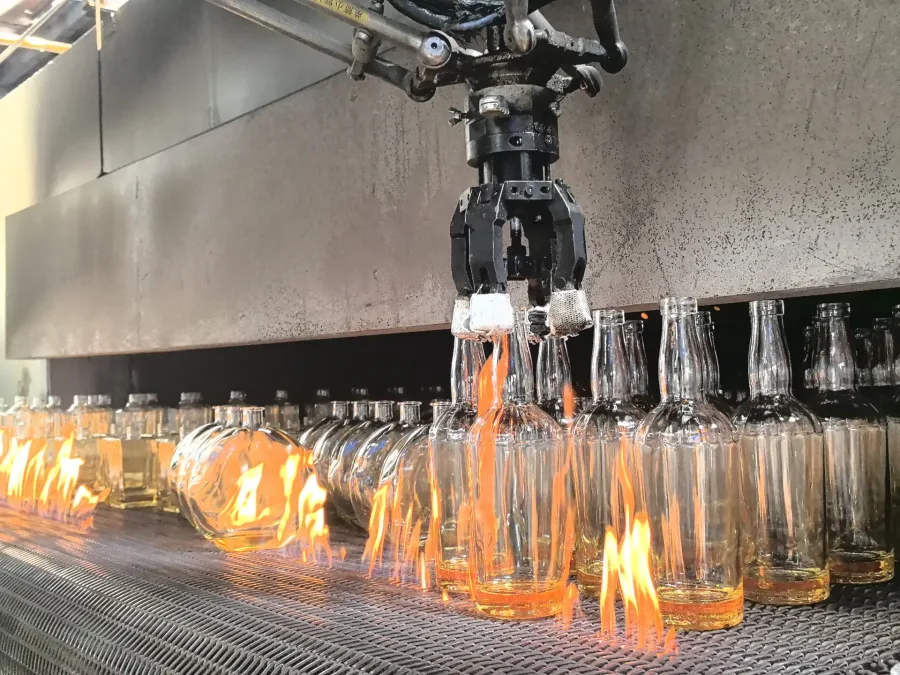
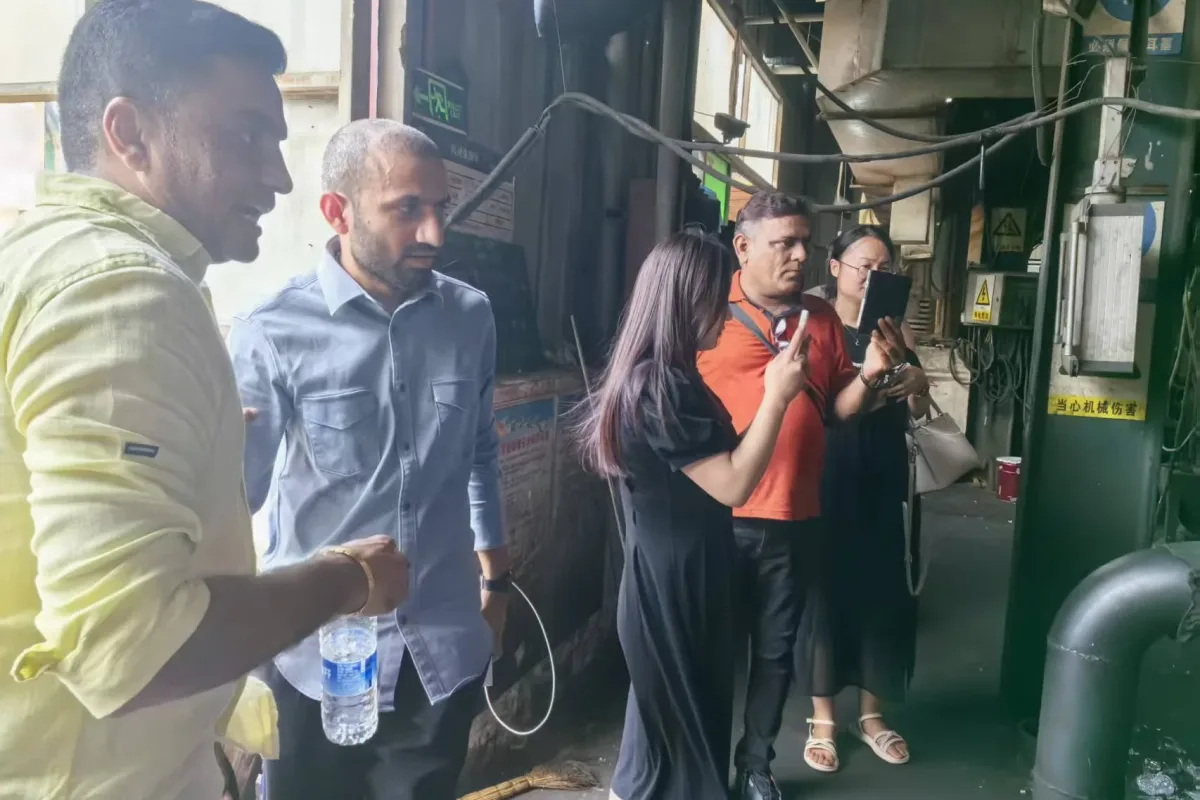
Ask how your bottle would be scheduled, which operations constrain the order and what changes could affect the proposed production date. Relevant evidence may include a current site review, an agreed production plan and records for comparable work. Photographs can help explain a process, but they do not establish ownership, available capacity or the ability to meet your specification.
Request quality evidence for the selected bottle
Convert “good quality” into checks that both parties can apply. Agree on the drawing revision, dimensional tolerances, visual defect definitions, sampling approach and acceptance criteria before production. The inspection plan should reflect the actual application rather than an unrelated bottle or a generic list of tests.
Ruisheng’s catalogue lists a glass bottle impact resistance tester in its quality-control section. That equipment listing does not provide a test standard, inspection frequency, acceptance threshold or results for a selected model. It therefore does not establish that every bottle has passed impact testing.
Ask what was tested, how it was tested and which batch the result represents. For dimensional checks, request the measured values against the agreed drawing. For performance tests, request the method, conditions, acceptance criteria and results. Where a report or certificate is supplied, check its date, issuing body, named product and scope before treating it as evidence for your order.
A practical inspection discussion should also cover defect photographs, batch identification and the response to a nonconforming shipment. Agree how an issue will be recorded, investigated and resolved. Do not assume that a certificate replaces bottle-and-closure trials or that a satisfactory sample proves every future batch will be acceptable.
Quote the complete package, not just the clear bottle
Ask suppliers to distinguish an existing bottle design from a new-mould project. Request the applicable minimum order quantity for each proposed model and identify whether a minimum applies per model, colour or decoration run. A quantity discussed for one project should not be treated as a supplier-wide purchasing rule.
Ruisheng Glass provides OEM/ODM development covering mould engineering, sizes, shapes, colours, caps or stoppers and decoration. Describe those requirements together so that the quotation addresses the intended package. Custom Glass Bottle OEM/ODM and Glass Bottle Decoration are relevant service pages when the project goes beyond an undecorated container.
Separate bottle cost from tooling, sample development, decoration, closures, packaging and freight. State the artwork position, finish expectations and closure requirements, then ask the supplier to identify exclusions. A quotation for clear bottles is not automatically a quotation for printed bottles with matched stoppers.
A Ruisheng project review records an engineering assessment in which the requested dimensions could be met, but bottle weight needed adjustment. The useful lesson is to ask which requirements are feasible together. If weight, shape or decoration changes during development, obtain the revised drawing and commercial assumptions before approving tooling.
Use sample approval and written handovers to control international orders
Whether you are evaluating US glass bottle manufacturers or glass bottle manufacturers in China, verify the actual production location rather than assuming it matches the sales office. Compare the proposed delivery route, quotation terms, import responsibilities and communication arrangements without treating country of origin as proof of quality.
Review the bottle and its intended closure as a matched package. Check fit, insertion or application behaviour, seal performance and compatibility with the planned filling process. Assess the decorated version where decoration could affect appearance, handling or labelling. Record which sample revision was approved and what remains unresolved.
One Ruisheng project review records a closure sample test video being sent before mass production, while a physical sample was not sent for the buyer’s confirmation. This is a useful caution: a supplier’s test video is not a substitute for the buyer’s agreed sample-approval step. Define explicitly who must approve the sample and what authorizes production.
Keep one written record of the approved drawing, sample identification, closure, decoration, quantity, packaging and inspection criteria. Before placing the order, confirm freight scope, shipment documents, payment milestones and the process for handling defects or transit damage. Record later changes in the same controlled thread rather than relying on separate informal messages.
For an enquiry to Ruisheng Glass, include the application, capacity, quantity and target market, plus a shareable reference URL in the message. Arrange drawing or artwork exchange with [email protected] after the initial enquiry. The enquiry form does not accept file uploads.
Frequently asked questions
Are the largest glass bottle manufacturers always the best choice?
No single producer is best for every packaging project. The largest glass bottle manufacturers may have substantial operations, but size alone does not establish a suitable order minimum, available production slot or capability for your design. Compare candidates against the same specification, evidence requirements and approval process.
Where should a buyer start when looking for empty spirits bottles?
Start with a catalogue that matches the intended spirits application, then ask about the selected model rather than assuming catalogue inclusion means current stock. Ruisheng Glass’s Products page is a starting point for its bottle offering. Confirm the drawing, closure, order quantity and quotation scope before making a purchasing decision.