What does 700ml mean—and when should you choose it?
A 700ml bottle is intended for a nominal fill of 700 millilitres, equivalent to 70cl or 0.7 litres. In a packaging enquiry, that figure describes the intended contents volume. It does not establish the bottle’s external dimensions, empty weight, neck finish or maximum internal capacity.
Choose the pack size around the intended sales market and bottling operation before choosing the silhouette. Have the responsible importer, bottler or regulatory adviser confirm the applicable volume and labelling requirements. A familiar bottle size is not, by itself, evidence that it suits every destination.
A 750ml bottle holds 50ml more at nominal fill than a 700ml bottle. Changing between them therefore affects the amount of spirit allocated to each finished unit as well as the declared volume. It may also require different labels, cartons or filling settings; do not treat the change as a simple artwork substitution.
For a replacement packaging project, identify whether you need the same nominal volume or a genuinely interchangeable bottle. Two 700ml designs can have different heights, body widths and closure systems, even though their intended fill volume is identical.
Read nominal and brimful capacity separately
Nominal capacity is the intended declared fill volume. Brimful capacity is the volume a bottle holds when filled to the brim under the specified measurement conditions. The difference helps explain the space available above the liquid, but it is not a complete filling instruction.
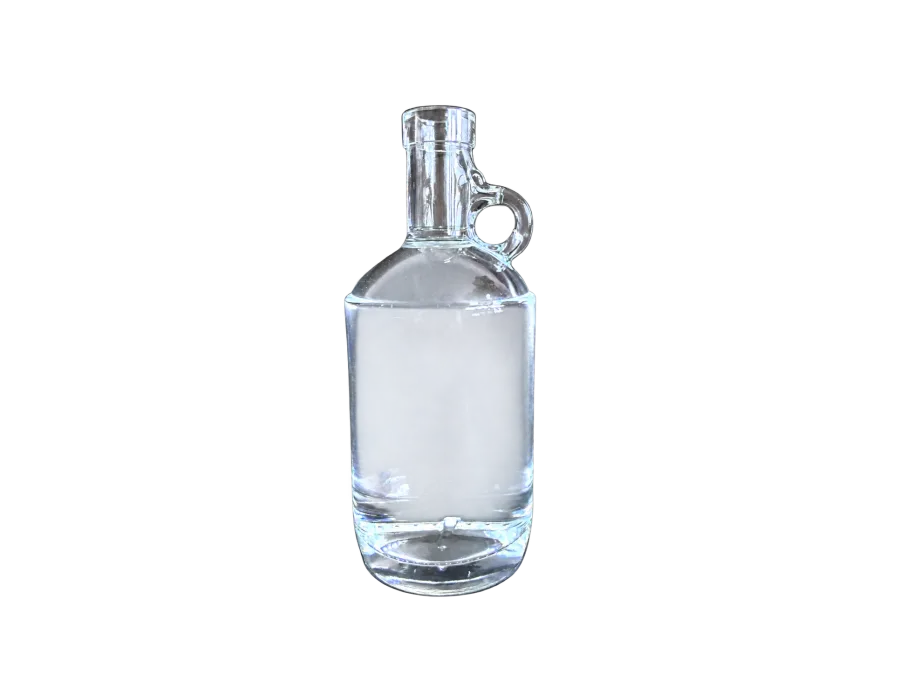
The supplied drawing for the 700ml New Era bottle specifies a brimful capacity of 725±10ml and a bottle weight of 850±10g. These values apply only to that identified design. They come from a technical drawing, not a production inspection report; approval status and drawing date are not established by the supplied specification excerpt.
At the stated central brimful value, the arithmetic difference from a 700ml fill is 25ml. That calculation does not establish an approved operating headspace: actual capacity variation, liquid temperature and closure displacement still need to be considered. Do not use the brimful tolerance as permission to vary the declared contents.
Before approving a bottle, ask the supplier and bottler to agree how capacity will be measured, which drawing revision governs the order and what fill level is expected with the intended liquid and closure. A water-capacity check should follow an agreed method rather than an informal visual comparison.

Compare shape and weight against the bottling operation
Start with the physical limits of the filling and packing operation. Overall height, maximum body width, base profile and usable label area matter independently of nominal volume. A broad, short bottle and a tall, narrow bottle can both be 700ml while needing different handling arrangements.
A round body may suit a wraparound label, while a square or tapered body requires closer attention to label dimensions, corners and application position. Test the intended artwork on a physical sample. A flat artwork proof cannot reveal how a label behaves across a curve or near a mould seam.
Bottle weight should also be evaluated as an operating and transport choice, not a stand-alone quality score. More glass increases empty-pack mass, but weight alone does not prove strength or sealing performance. Compare each design against its own agreed requirements and sample checks.
For example, when replacing an existing 700ml bottle with a wider design, check the line guides, label application and carton partitions before approval. Keeping the fill volume unchanged does not preserve those interfaces.
Match the neck, closure and filled product
A 700ml capacity description does not identify a compatible cap or stopper. Select the closure system with the neck drawing, including the dimensions and tolerances that govern sealing and application. Similar-looking bottle mouths are not sufficient evidence of interchangeability.
For a stopper closure, confirm the insertion and sealing requirements with the closure supplier. For a screw closure, confirm the specified finish and application conditions. In either case, the liner or sealing material must be reviewed for the intended spirit and storage conditions.
Evaluate the assembled package using the intended fill and closure, not just an empty bottle with a loosely fitted sample cap. Agree checks for leakage, closure retention, opening behaviour and the conditions expected during distribution. The acceptance method should be defined before bulk approval.
Ruisheng Glass provides OEM/ODM bottle development that includes caps or stoppers. That scope makes closure matching part of the development discussion, but compatibility still needs to be established for the selected bottle and closure combination.
Make sample approval specific to the 700ml design
A sample is useful only when its purpose is clear. An appearance reference may help assess glass colour or shape, but it should not automatically become the dimensional approval sample for a different capacity or neck specification.
Record the sample’s model identification and drawing revision, then check capacity, dimensions, empty weight and closure fit against the agreed specification. Separate the plain-glass review from decoration approval so a satisfactory print or coating does not obscure an unresolved bottle requirement.
Where practical, run the selected bottle through the actual filling, closing and labelling operation. Record any changes needed to guides, tooling or machine settings. Retain an agreed reference sample and define which measurable criteria take priority if later bottles differ from its appearance.
Request quality documentation that can be connected to the proposed product and its intended use. A report for another bottle size or an unidentified sample does not automatically establish suitability for the 700ml design under review.
Turn the selected design into a comparable quotation
Once the technical requirements are clear, specify what the quotation must include. Separate the plain bottle, matched closure, decoration, tooling and protective packing. Ask whether supply depends on finished inventory, an existing-mould production run or new mould development; those are different purchasing conditions.
Request the minimum order for the exact model, glass material and decoration requirement rather than assuming one quantity applies to every 700ml bottle. Confirm carton or pallet arrangements and the proposed loading plan separately. Bottle capacity alone cannot establish how many units will fit in a shipping container.
Ruisheng Glass manufactures liquor and spirits bottles and offers custom development covering mould engineering, sizes, shapes, colours and decoration. The 700ml Glass Bottle page is the relevant product starting point; a project-specific review is needed to confirm current design options and order conditions.
A useful enquiry states the intended spirit, destination market, 700ml nominal fill, preferred shape, closure, decoration, initial quantity and required arrival date. Include a shareable reference URL in the message if you have a design reference. The goal is a quotation tied to an identifiable package—not merely a price for an unspecified 700ml bottle.